We should dare to embrace more Europe
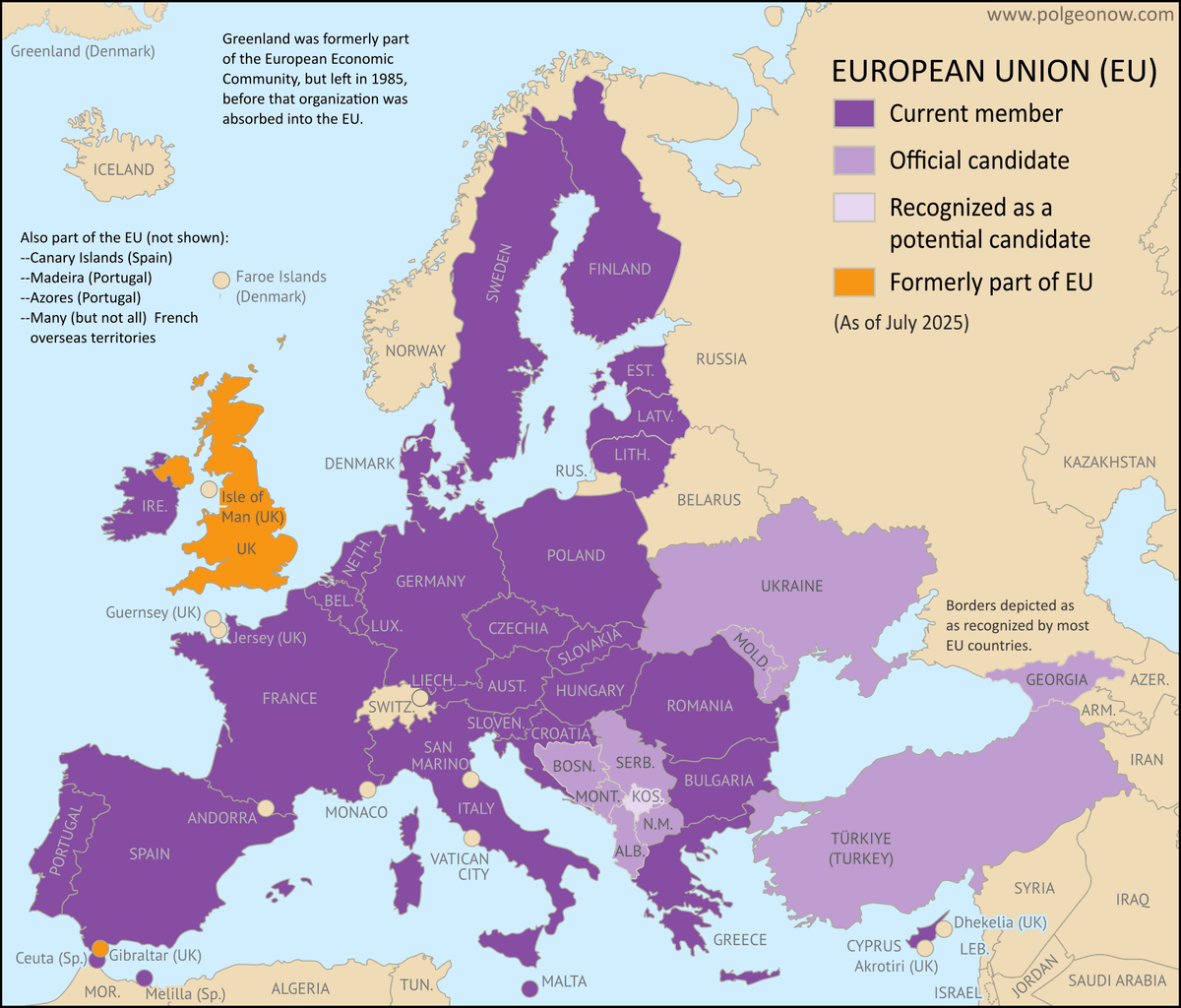
We should dare to embrace more Europe not less!
A somewhat digressive thought about Europe in the world:
Europe has been on the global agenda and has been criticized by some U.S. politicians and government officials for what it is for some days now during the Summit of the World Economic Forum. They describe Europe as weak, cowardly, or slow. Viewed superficially from the outside, this certainly cannot be dismissed entirely. BUT there are two sides to this view.
Here is the first side:
Well, I assume the root causes are a little bit more complex. The Europe Complex consists of the EU, the European NATO members, the OSCE, the Council of Europe, non-aligned states, and the UK. Within this conglomerate of different states and organisations, you find groups with overlapping but not similar interests, e.g. the Nordics, BeNeLux, Weimar Triangle, French-German partnerships, etc. On the other hand you see conflicts, internal and external, e.g. French-German rivalry over dominance, Polish-German history, or Turkish-Greek / Cypriotic-Turkish struggles over territory, etc. Than you have an imbalance of being affected or perceiving being affected, e.g. Poland vs. Spain about Russian aggression.
Additionally to all that above, you have in every country domestic issues which guide the European agenda, but often the domestic issues dominate the European topics, e.g. unemployment numbers, social welfare systems, conscription. Furthermore, in Germany, for instance, you have strong states as checks & balances of the federal government.
Sometimes EU agenda topics are misused to distract citizens from the failures of the national governments.You have completely different strategic cultures. While the UK (only NATO) & France are interventionists, most other nations abstain from interventions or military force to enforce their individual national interests. One very significant symbol of this difference between the UK & France and the rest is the possession of nuclear weapons.
Moreover, on top of all this, you have in the middle of everything Germany. A nation which caused one and a half world wars, committed horrifying crimes against humanity, was democratised, demilitarised, denazified, decentralised by the Allies and now wants to do the right things the right way.All this is only the superficial view of a German citizen. If someone would dig deeper into this topic, the situation would turn out to be even much more complex.
And here comes the second side of the same coin:
The Europeans organized during the last 80 years since the end of the Second World War to balance the increasingly complex national interests of a growing number of nation states, were giving up sovereignty in an increasing number of political fields generated the most peaceful and therefore most prosperous period for roughly 450 Million Europeans. And with the above mentioned differences in mind, this was no easy task.
Moreover, the EU grew enormously after the end of the cold war. The EU raised the income levels of tenth of millions of Europeans in a comparable short time.
All of this consumes a substantial amount of resources. The EU alone has tens of thousands of public servants. And all member-states have a large number dedicated to European affairs. Decision-making in the EU is complicated and time consuming (see Mercosur deal) but all of this is worth all the effort. The EU needs to be reformed. The most important area is probably the procedures for decison-making, because currently unanimity vote predominates and this is hardly feasible with 27 member-states and some governments under Chinese, Russian or U.S. influence. I do not want to live in a world where, for instance, France and Germany would be struggling and fighting over hegemony in Europe. This would be much more costly for everyone in Europe.
If you sit on an island with one of the most peaceful neighbours in the north and a comparable non-dangerous neighbour in the south, and a history of roughly 250 years compared to more than 2,500 years of history, then all of the above achievements could look weak, but in reality, Europe is tremendously powerful. Not because we exert political power in our foreign relations, but because we exert balance and self-restrain internally to keep this Union functioning.
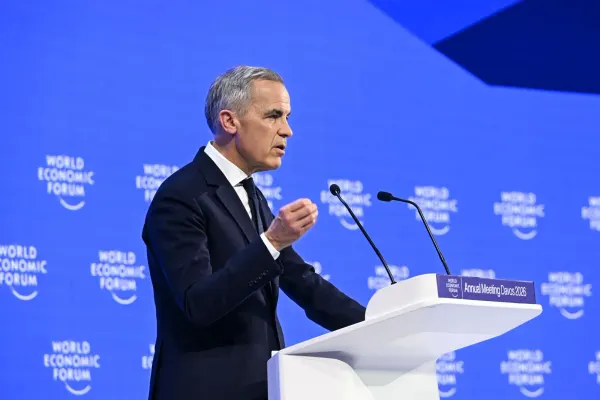
Hence the speech of the Canadian Prime Minister was partially wrong, at least from a European perspective [1]. Integration and even extreme integration as the European one, can be compelling. I totally agree that our integration into the globalization was flawed, but this is no reason to discard integration per se. I wish more Europeans would see and understand this power and strength we posses. And to be honest, I do not care what others believe. If they poke the bear, they will realize his power when he is completely awake.
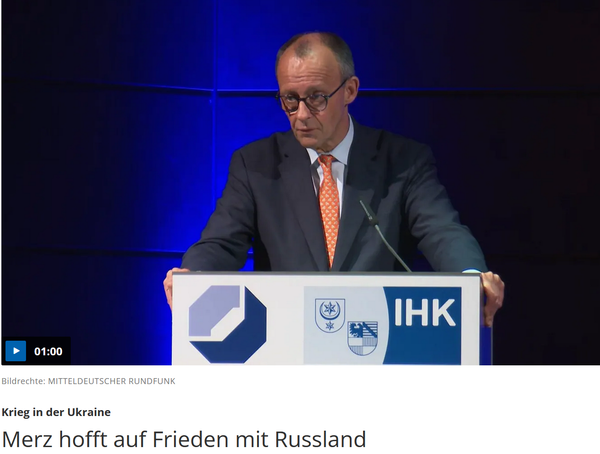
I very much appreciated the speech of President Selensky [2], because he made unambiguously clear what the real shortcomings of the EU were in the last four to elven years. And this is not about taming Russia or China or building some counter-balance to the U.S. Our shortcoming have been not to address our weaknesses and vulnerabilities and to improve our strengths and to support all nations such as Ukraine which want to be part of this outstanding history of a value-based union of independent nations. In this regard, the speech of the German Chancellor Merz was quite strong. He clearly stressed that Europe can only prevail as a union and that we need to strengthen our integration:
" [...] Third, we must stand closer together, among Europeans and among like-minded partners. We are doing this.
As we forge ahead, we must never forget one thing: A world where only power counts is a dangerous place - first for small states, then for the middle powers, and ultimately for the great ones.
I do not say this lightly. In the twentieth century, my country, Germany, went down this road to its bitter end. It pulled the world into a black abyss.
So let us bear in mind: Our greatest strength remains the ability to build partnerships and alliances amongst equals based on mutual trust and respect.
I remind you, after 1945, the United States of America inspired us Germans to embrace this logic. On this foundation, NATO became the strongest alliance in history. That is why we hold true to this idea" [3].
In international relations, there is a saying that states have no friends, only national interests. I would agree with this statement in general, but when it comes to NATO and especially the EU, I would no longer subscribe to it. Because together, we are more than just the sum of our parts. That is a lesson learned from post-war European history.
[1] My comment of the speech of Canadian Prime Minister Carney with a link to the transcript of his speech:
https://beyond-stability.ghost.io/banalitat-der-erkenntnis/
[2] Speech of Ukriane's President Selensky:
https://www.weforum.org/meetings/world-economic-forum-annual-meeting-2026/sessions/special-address-by-volodymyr-zelenskyy-president-of-ukraine-3bf6955e08/
[3] Speech of German Chancellor Friedrich Merz (transcript):https://www.bundesregierung.de/breg-de/aktuelles/rede-von-bundeskanzler-merz-beim-world-economic-forum-am-22-januar-2026-in-davos-2403600